
The Empirical Truth: Phase, Correlation, and the "Mental McGurk" Secret of Mixing and Mastering
Apr 19, 2026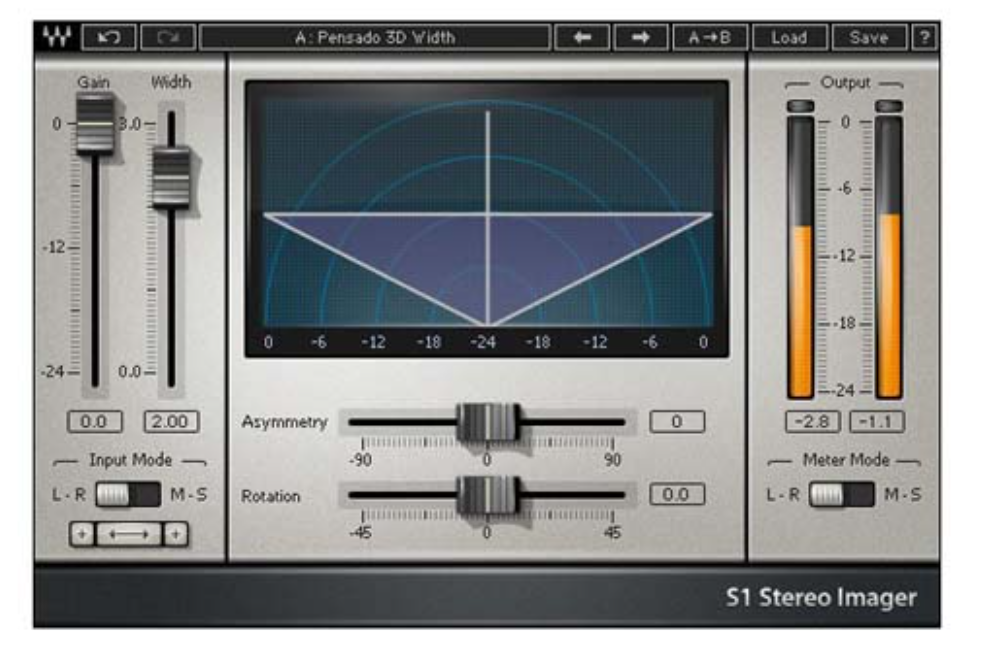
In this industry, we are surrounded by "audio voodoo." I’ve spent my life as a researcher and producer stripping away the B.S. to find the empirical truth. Whether I’m teaching my Mute Automation Checkerboard A/B Workflow System or discussing the nuances of psychoacoustics, my goal is always the same: Quality Culture.
Today, we are going to dismantle two of the most misunderstood tools in your arsenal: the Phase Meter and the Correlation Meter. Then, I’m going to share a discovery involving the Waves S1 Imager that will change the way you handle "space" in your mixes forever.
The Reality of "The Mental McGurk Effect"
Before we talk gear, we have to talk about your brain. Most of you know the McGurk Effect—the famous psychoacoustic phenomenon where sight overrides sound (like seeing a person’s lips move to "fa" while the audio is "ba," causing you to hear "fa").
I have spent years expanding this research to coin the term The Mental McGurk Effect. This isn't just about what you see with your eyes; it’s about suggestion. It’s when a written comment, a look on a client’s face, or a "pro" tip you read online causes your mind to perceive sound in a false way. If you think a track should sound "warm" because of a certain plugin GUI, or if you believe a meter is telling you there’s a problem, your brain will actually alter your auditory perception to match that suggestion. To create consistent masterpiece recordings as an engineer, you must learn to defeat this effect.
The Truth Made Simple: Phase vs. Correlation
Let’s stop the confusion right now. People often make this too complex, so let’s use a comparison that actually paints the picture.
Imagine you are looking at a high-definition photograph of a person.
- In Phase: The "red," "blue," and "green" layers of that photo are stacked perfectly on top of each other. The result? A sharp, clear, 3D image that pops off the screen.
- Out of Phase: One of those color layers is shifted just a tiny bit to the left or right. Suddenly, the image looks "ghostly," blurry, and makes your eyes hurt. You can still see the person, but the definition is gone.
Phase is that alignment. If your Left and Right channels aren't "aligned" in their timing, your audio loses its focus. It becomes blurry, hollow, and thin.
Correlation is simply the Scorecard. It’s a math tool that measures how well those "color layers" are stacked over a period of time and gives it a score from -1 to +1.
Why does the correlation meter lean to the right when the mix is good?
Who invented the correlation meter? It's so confusing. What a stupid design. Why does good lean to the right and bad lean to the left? Shouldn't it be a vertical meter that goes up when good and down when bad. That would be so much better!
Here is the truth:
- +1 (Far Right): The layers are perfectly stacked (Mono). This is the safest point for a "good" mix to lean toward.
- 0 (Middle): The layers are completely different—like hearing a vocal in one speaker and an instrument in the other. You have two totally different sources in each speaker. This doesn't necessarily mean it sounds bad; it’s just two different signals.
- -1 (Far Left): The layers are actively fighting to erase each other. If you combined them, you'd be left with a blank white page.
This design was originally created for vinyl cutting. If the meter leaned too far left (negative correlation), the physical needle would literally jump out of the groove. It’s an old design, but the physics remain.
The Secret: The S1 Imager "Nano-Second" Hack
I’ve discovered a secret that allows you to achieve a level of depth and quality on a single track, a group, or even a full mix that mirrors the results of elite post-production software.
Here is the discovery:
Take the Waves S1 Imager. Instead of using it for simple widening, do this:
- Put the S1 on your track.
- Switch the mode to M/S (Mid-Side).
- Manipulate the width and asymmetrical controls.
By using the S1 in M/S mode, you are manipulating nano-seconds of delay between the Mid and Side information. This mimics the sophisticated time-alignment used in high-end film post-production. You aren't just making it "wide"; you are creating a previously unattainable quality and 3D space on a single track or group.
Warning: Don't overdo the effect and know when NOT to use it - by using your ears. Don't just rely on meters. Close your eyes and listen to it - does it sound focused and rich enough in relation to its depth and width? And it's always a GREAT idea to check your mix in mono while or after using this technique. If anything drastically alters while in mono as a result of using this technique, adjust it until the mono mix sounds good. With experience, as long as you close your eyes and listen, and check in mono with your eyes closed, you will know when to use it and how much, and when not to use it.
Defeating the Mental McGurk Effect
When you use this S1 hack, your Correlation Meter might start dancing toward the middle or even slightly left. This is where the Mental McGurk Effect kicks in. Because the meter (a visual suggestion) says things are "wrong," your brain starts "hearing" problems that aren't there.
The Empirical Test:
To find the truth, use my Mute Automation Checkerboard A/B Workflow. Flip your mix to Mono and close your eyes.
- If the sound stays clear and just gets narrower, ignore the suggestion of the meter. Your ears are right.
- If the sound disappears or turns into a "comb-filter" mess (the audio equivalent of that blurry photo where the sound becomes congested like it has a cold, and/or the bass gets thin and weak, and/or when things start disappearing), the meter is telling the truth.
The Bottom Line
Stop listening with your eyes or your expectations. Experiment with the S1 Imager in M/S to find out if those hidden nano-seconds of depth can improve your mix, keep your correlation in a healthy range, and always trust my revolutionary Mute Automation A/B test over the B.S. that tends to be spread by those who don't have the time to do proper research.
We are building a culture of quality. Let’s teach the truth.
Gary Gray
The Sculptor of Sound
Voting Member of the Grammy® Recording Academy
#1 Charting Billboard Producer & Engineer
Subscribe to Gary's Insider Newsletter!
Get ahead of the curve with this weekly newsletter from Gary Gray and get a copy of Gary's book, THE HOME STUDIO BIBLE, for free as our Thank You Gift!
We hate SPAM. We will never sell your information, for any reason.